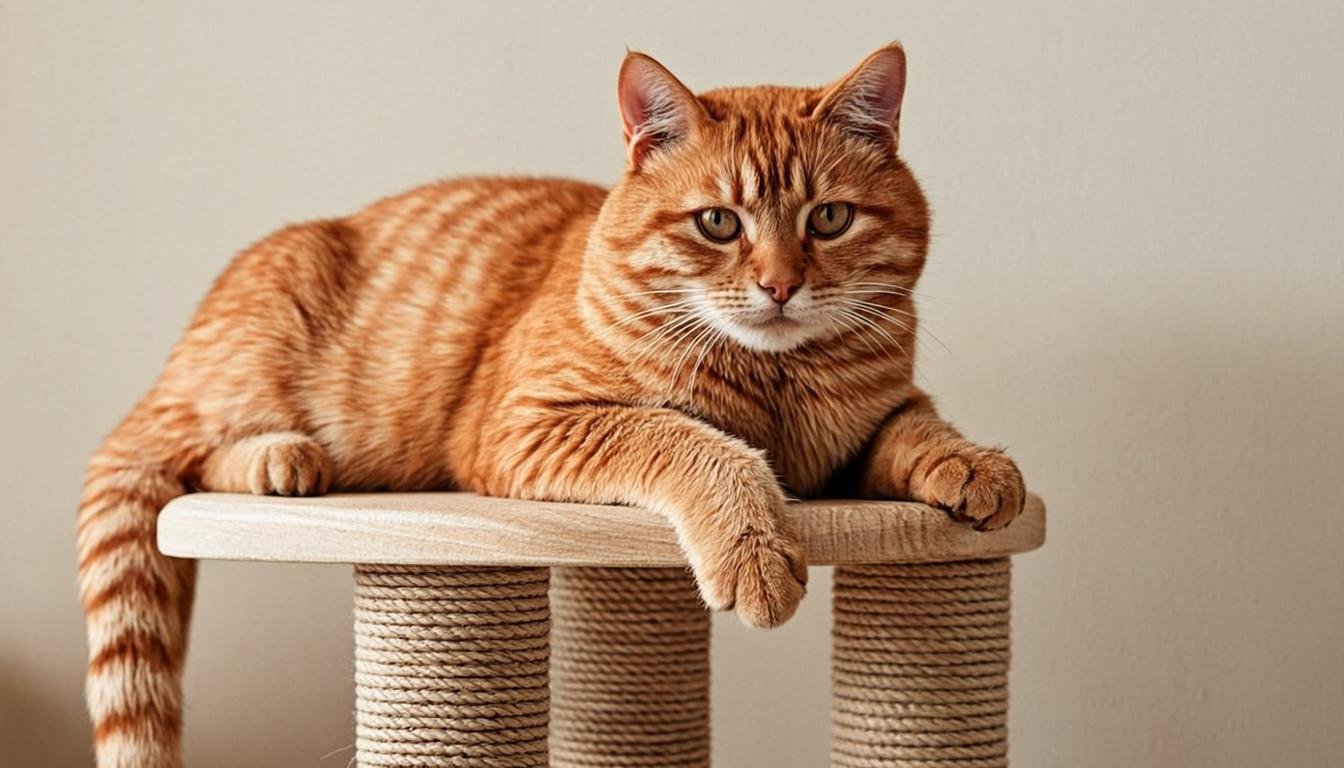
How to Choose the Right Cat Tree for Your Feline
A cat tree is the number one investment for your indoor feline's well-being. It combines a scratching post, an observation perch, a hiding place, and a play area. But with the multitude of models available, how do you choose? Here is our complete guide to making the right choice.
Why a Cat Tree is Essential
The Natural Need to Climb
In the wild, cats climb to:
- Observe their territory from a height (surveillance position)
- Hunt prey from an elevated post
- Take refuge from predators
- Mark their territory (scratching)
Deprived of height, a cat develops stress, boredom, and behavioral problems.
An Alternative to the Sofa and Furniture
A cat tree with an integrated scratching post prevents your cat from scratching your furniture. Cats prefer rough materials (sisal, cardboard) over fabric.
Criteria for Choosing a Cat Tree
1. The Height
Height is the number one criterion. The taller the tree, the happier your cat will be.
| Cat | Recommended Height | |------|---------------------| | Kitten | 60-90 cm | | Average Cat | 100-150 cm | | Large Cat (Maine Coon) | 150-200 cm | | Multi-cat Household | 180-250 cm |
2. Stability
A wobbly tree will scare the cat. Check for:
- A wide and heavy base
- Thick posts (minimum 10 cm diameter)
- Quality materials (solid wood preferred)
- The option to secure it to the wall for large models
3. The Materials
The Scratching Post (Sisal)
- Prefer natural sisal (rough)
- Avoid synthetics (too smooth)
- Check the height of the scratching post (minimum 50 cm for an adult cat)
The Platforms
- Wood with thick carpet (easy to replace)
- Avoid velvet (the cat can't scratch it)
- Removable and washable fabric (a plus)
The Structure
- Solid wood (the most durable)
- Cardboard (economical but less durable)
- Metal (ultra-stable but less natural)
4. The Number of Platforms
For one cat, 2-3 platforms are sufficient. For multiple cats, plan for:
- 1 platform per cat + 1 hiding spot (house or hammock)
- Staggered levels to make climbing easier
- Varied heights for observing at different levels
5. The Accessories
Options to consider:
- Enclosed House: a refuge for shy cats
- Hanging Hammock: appreciated by light cats
- Hanging Toys: playful stimulation
- Integrated Feeder: for feeding at a height
- Wall Shelf: to extend the territory
Mistakes to Avoid
Buying One That's Too Small
A 60 cm tree for an adult cat is useless. A cat wants to climb high.
Choosing an Unstable Model
Cheap trees are often light and unstable. The cat won't use them.
Ignoring the Scratching Posts
A tree without a scratching post is only for climbing. The cat needs both functions.
Not Respecting the Cat's Personality
A shy cat prefers an enclosed house. An extroverted cat loves open platforms.
How Much to Invest?
| Budget | Type of Tree | |--------|--------------| | 30-60€ | Small basic model (kitten or small cat) | | 80-150€ | Good mid-range (adult cat) | | 200-400€ | High-end (large cat, multi-cat household) | | 500€+ | Custom-made or premium tree |
Our advice: Invest in quality from the start. A good tree lasts 10 years; a cheap model needs replacing every 2 years.
Alternatives to the Cat Tree
If space is limited, consider:
Wall Shelves
- Installed in a staircase pattern on the wall
- Stable and modular
- Cheaper than a large tree
Vertical Scratching Posts
- Simple sisal post
- Ideal for a studio apartment
- 50-100€ for a good model
Multi-functional Furniture
- Sofa with an integrated scratching post
- Tables with a cat platform
- Elevated, accessible furniture
FAQ
At what age should I get a cat tree?
As early as 2-3 months. The kitten learns to climb and scratch in the right place. Start with a basic model, then get a larger one when it reaches adulthood.
My cat isn't using its tree, what should I do?
- Place it near a window
- Put treats on the platforms
- Play with it on the tree (fishing rod)
- Check the stability (an unstable tree = not used)
Should I clean the cat tree?
Yes, once a month. Vacuum the fur, check the screws, and replace worn-out sisal rope. Removable covers = easy cleaning.
Conclusion
A cat tree is the most profitable investment for your feline's happiness. It combines a natural need (to climb), a behavior (to scratch), and comfort (a refuge). Take the time to choose a model that is adapted to your cat's size and personality.
For a complementary approach to well-being, the GatoPouch allows you to carry your cat against you — a gentle alternative when it comes down from its tree to seek contact.