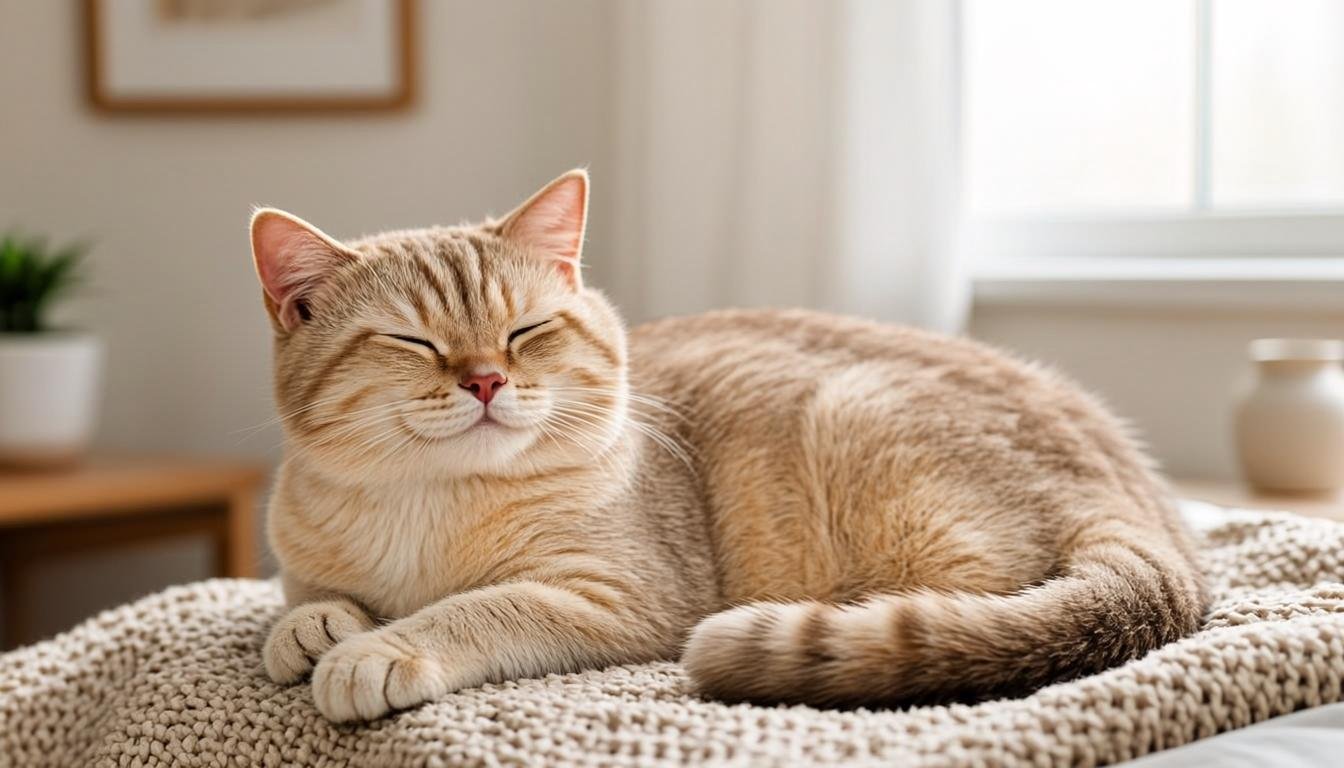
The purr of the cat is one of the most soothing and recognizable sounds of feline companionship. This characteristic murmur is not just a sign of contentment; it hides complex mechanisms and surprising benefits for your cat and even for you. Understanding why cats purr and what this phenomenon implies for their well-being will help you to better interact with your four-legged companion.
The origins of purring: a fascinating mechanism
Purring is a sound produced by most felines, from domestic house cats to large wild cats. This phenomenon has intrigued scientists and cat lovers for decades.
A complex muscular mechanism
Purring results from rhythmic contractions of the larynx muscles, which occur about 25 times per second. These movements cause the rapid opening and closing of the airways, creating the characteristic sound. This process is voluntarily controlled by the cat, which explains why it can purr on command, even without being stimulated by petting.
At what age do cats start to purr?
Kittens are capable of purring from their second day of life. This behavior appears very early in their development, often during nursing. This allows them to communicate with their mother and signal that they are healthy and in good condition. This valuable reflex persists throughout their lives.
The reasons for purring: much more than just a sign of happiness
While purring is often associated with your cat's satisfaction, its causes are actually much more varied and complex.
Purring as a communication tool
Cats use purring to communicate various emotions and needs:
- Contentment and soothing: This is the most common reason. Your cat purrs when it feels happy, relaxed, or safe.
- Demand for attention: Some cats purr to get your attention and receive petting or food.
- Self-soothing: Cats also purr to calm themselves in stressful situations, such as at the vet or during a trip.
- Social bonding: Cats purr among themselves to strengthen social bonds, especially between mothers and their young.
Purring in painful situations
Contrary to popular belief, cats don't only purr when they are happy. They can also purr when they are injured or sick. This behavior could be a self-soothing mechanism, allowing them to cope with pain and remain calm.
The benefits of purring for the cat's health
Purring is not just a pleasant sound; it has positive physiological effects on your cat's health.
Reduction of stress and anxiety
Purring has a calming effect on your cat's nervous system. The vibrations produced can help lower the heart rate and blood pressure, thus promoting a state of relaxation. This is why many cats purr when they are stressed or after a frightening event.
Promotion of healing
Studies suggest that the frequencies of purring (between 25 and 150 Hz) could stimulate bone density and promote tissue repair. This would be particularly beneficial for older cats or those suffering from injuries. Purring would act as a natural therapy to speed up healing.
Strengthening the bond with humans
Purring also has an impact on humans. The comforting sound can reduce stress and lower blood pressure in people who hear their cat purr. This creates a virtuous circle where the well-being of one promotes that of the other.
How to encourage your cat to purr?
If you want your cat to purr more often, here are some practical tips:
- Create a calm environment: Cats purr more easily in a peaceful and secure space.
- Offer gentle petting: Most cats love to be petted under the chin or on their back.
- Use interactive toys: Stimulating play can make your cat happy and relaxed.
- Ensure it is comfortable: A stressed or uncomfortable cat will purr less. Check its basic needs (food, water, clean litter).
FAQ about cat purring
Do all cats purr?
No, not all cats purr in the same way. For example, Siamese cats have a harsher meow and purr differently. Furthermore, some cats, like tigers, cannot purr, unlike lions.
Can purring be a sign of illness?
Yes, in some cases. If your cat is purring unusually, especially if it seems sick or in pain, it is advisable to consult a veterinarian. Purring can be an attempt to calm itself in the face of physical discomfort.
My cat purrs when it eats, is this normal?
Yes, it's perfectly normal! This usually means your cat is satisfied and secure during its meal. It's a good sign that you are taking good care of it.
Purring is a universal language of the cat, rich in meaning and benefits. By understanding this phenomenon, you strengthen your bond with your feline and contribute to its well-being. For even more advice on caring for your cat, discover our tailored solutions on GatoPouch.